
Deploying a mobile service in markets like Ghana requires addressing the 'last mile' of connectivity. While building direct telecom integrations is traditionally complex, requiring dedicated server hardware and expensive aggregator contracts, SparkGlim provides a managed backend that abstracts these layers. Organizations can focus on campaign logic and user interaction while our infrastructure handles the request-response cycles between mobile handsets and your digital assets.
Understanding the distinction between application logic and telecom routing is essential for a successful launch. The SparkGlim backend serves as the orchestration layer, processing incoming requests, executing business logic—such as ticket generation, voting tallies, or donation processing—and returning the appropriate string to the mobile user. By offloading the handshake with mobile network operators, organizers can move from conceptualization to live status without the prohibitive overhead of managing signaling protocols.

Understanding Managed vs. User-Configured Elements
SparkGlim handles the heavy lifting of the USSD session state. When a user dials your shortcode, our infrastructure maintains the session, routes traffic to your specific campaign, and ensures that the menu structure remains responsive. However, the organization retains responsibility for the content and parameters that govern user experience.
What SparkGlim Manages
- Session Management: Maintaining the state of a user's multi-step journey through a menu.
- Data Routing: Ensuring that input data—such as a user's mobile money number or ticket quantity selection—is securely transmitted to the relevant SparkGlim database.
- Security & Encryption: Standardizing the transport layer to ensure that transaction flows adhere to modern security practices.
- Platform Integration: Connecting your USSD services to your broader campaign data, including mobile money payment gateways and event ticketing modules.
What You Must Configure
- Campaign Logic: You define the flow, the wording of each menu screen, and the validation logic for user inputs.
- Resource Allocation: Defining how many inventory units (e.g., tickets or votes) are available for a specific shortcode session.
- Deployment Scope: Determining whether a campaign is regional or national, and ensuring the associated metadata matches your target audience requirements.
- Operational Monitoring: Regularly checking your SparkGlim dashboard to observe traffic spikes and identifying potential bottlenecks in the menu flow.
The Difference Between Campaign Logic and Telecom Routing
New organizers often confuse telecom routing with application logic. Telecom routing is the physical path the signal takes from a mobile device to the network operator's switch, and finally to our gateway. You do not manage this. Campaign logic, conversely, is the sequence of choices you present to the user. When a user selects 'Buy Ticket' on a menu, your SparkGlim-configured campaign logic determines if that user is prompted for a payment or directed to a verification screen. Managing this logic efficiently is the difference between a high conversion rate and user frustration.
Operational Ownership and Monitoring
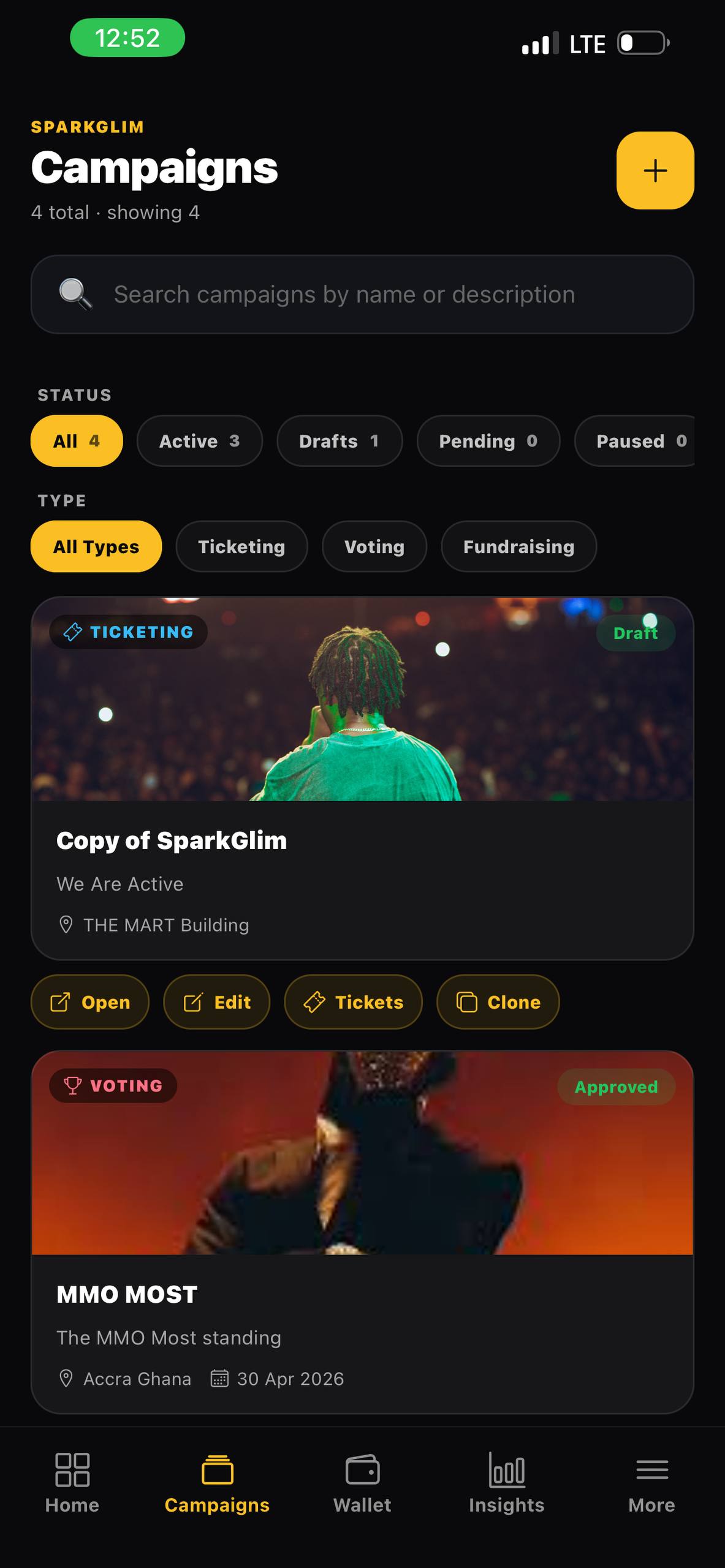
Operational ownership falls on the organization. While our infrastructure provides the uptime, you provide the context. If your campaign is a raffle, you are responsible for monitoring the database to ensure entries are registered correctly. If you are handling ticketing, you must verify that the white-label interface reflects accurate pricing. Our analytics tools provide the insights needed to monitor these flows, but proactive management is required to adjust messaging based on real-time feedback from participants.
Checklist for Successful Launch
- Define the User Journey: Map out every possible branch of the USSD menu on paper first.
- Configure the Backend: Use the SparkGlim creator dashboard to input menu strings and logic validation.
- Test in Sandbox: Use our simulation tools to walk through the menu, checking for typos or broken logic flows.
- Review Payment Integration: Ensure that your configured mobile money parameters are active and linked to the correct organization wallet.
- Monitor Early Traffic: Observe the first 100 sessions carefully to identify if users are getting 'stuck' at a specific menu stage.
When Custom Routing is Necessary
Most organizers thrive using shared USSD extensions. These allow for rapid deployment and lower upfront costs. However, some large-scale organizations—such as major universities or national retail chains—may require custom routing. Custom routing is appropriate when you have specific branding requirements or need dedicated shortcodes to manage high-volume, enterprise-level traffic across different network operators simultaneously. If you find your current configuration is insufficient for your volume, contact our support team to discuss upgrading your routing parameters.
Conclusion
Launch strategy is about abstraction. By leveraging the SparkGlim backend, you eliminate the need to deal with telecom complexities, allowing you to focus on the human experience of your event or business. Whether you are running a fundraiser in Accra or a ticketing campaign in a regional hub, the same foundational rules of clear logic and responsive monitoring apply. Start small, validate your menu flow, and use our platform tools to scale as your engagement grows.
FAQ Section
Question: Do I need to contact mobile network operators directly to set up my USSD codes?
Answer: No. SparkGlim provides the necessary infrastructure and gateway connections. You manage the campaign logic through our backend, and we handle the technical routing with the network operators.
Question: Can I change my menu options after the USSD service is already live?
Answer: Yes. The SparkGlim backend allows you to update your menu structures, ticket prices, and campaign messaging dynamically without needing to request new shortcodes or technical re-provisioning.
Question: How does SparkGlim ensure my mobile money transactions are secure?
Answer: All transaction flows through the SparkGlim backend are encrypted and follow rigorous security protocols for mobile payment processing, ensuring that user data and financial information are handled appropriately within our managed environment.
Question: Is there a difference between a shared USSD extension and a custom code?
Answer: A shared extension is a cost-effective, readily available code partitioned for your specific use, while a custom code is a dedicated, often vanity-branded number. We recommend starting with shared extensions for most campaign types.
For more information on getting started, visit our USSD platform page.
Article gallery
Frequently asked questions
Do I need to contact mobile network operators directly to set up my USSD codes?
No. SparkGlim provides the necessary infrastructure and gateway connections. You manage the campaign logic through our backend, and we handle the technical routing with the network operators.
Can I change my menu options after the USSD service is already live?
Yes. The SparkGlim backend allows you to update your menu structures, ticket prices, and campaign messaging dynamically without needing to request new shortcodes or technical re-provisioning.
How does SparkGlim ensure my mobile money transactions are secure?
All transaction flows through the SparkGlim backend are encrypted and follow rigorous security protocols for mobile payment processing, ensuring that user data and financial information are handled appropriately within our managed environment.
Is there a difference between a shared USSD extension and a custom code?
A shared extension is a cost-effective, readily available code partitioned for your specific use, while a custom code is a dedicated, often vanity-branded number. We recommend starting with shared extensions for most campaign types.
Found this helpful?

Comments (0)