
Defining Your Operational Requirements
Event organization is as much about logistics as it is about technology. Whether you are managing a campus conference in Accra or a community fundraising drive, the platform you choose acts as the digital infrastructure for your event. Before comparing specific providers, it is essential to identify whether your primary needs are centered on high-volume ticketing, specialized donor management, or simple registration workflows. The diversity of the event landscape—from music festivals to professional workshops—means that a one-size-fits-all approach often leads to unnecessary costs or feature gaps.
Understanding your technical comfort level and your audience's accessibility needs is equally critical. In markets where digital payment adoption varies, your chosen platform must bridge the gap between complex banking integrations and user-friendly mobile interfaces. By mapping out your requirements—such as whether you need QR code verification, team access levels, or real-time campaign analytics—you create a baseline that prevents common pitfalls like platform bloat or insufficient support during the critical final days of event promotion.
The Event Technology Landscape
The marketplace for event tools is divided into four main categories, each serving different organizational stages. Recognizing which category your current goals fall into helps clarify which tools are built for your scale.
Ticketing-Only Platforms
These platforms specialize in generating simple purchase flows. They are ideal for straightforward entry events where the goal is purely to track headcount and collect payments. However, they often lack the community-building features or long-term engagement tools necessary for recurring organizational campaigns.
Form-and-Payment Stacks
This approach involves stringing together disparate tools like Google Forms and independent payment gateways. While low-cost, this creates friction for the attendee and management overhead for the organizer. Managing manual reconciliation is a significant risk as your attendance numbers grow.
Social Platforms
Using social media event pages is excellent for discoverability and reach, but they lack the robust transaction security, ticket verification protocols, and data ownership required for professional operations. They are best treated as a marketing layer rather than an operational backbone.
Integrated Platforms
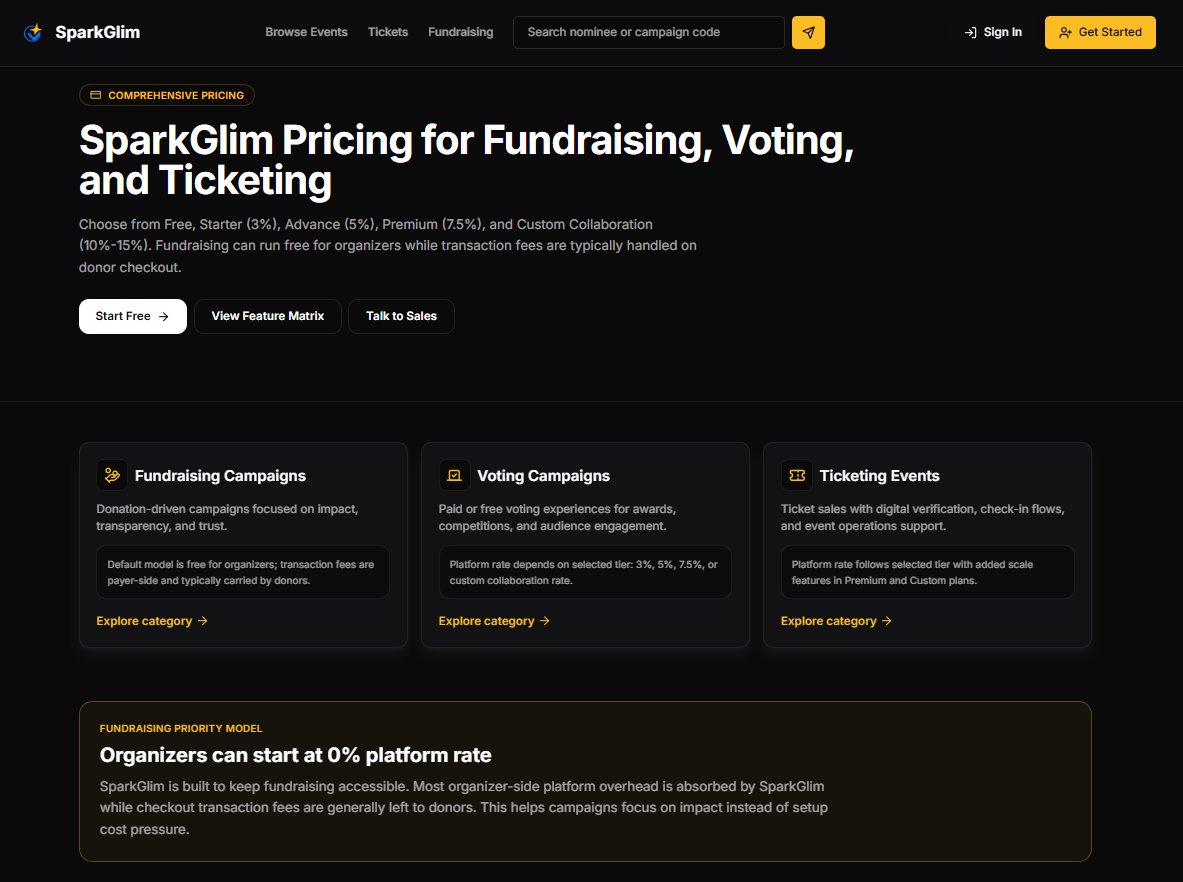
Integrated platforms, such as SparkGlim, provide an all-in-one ecosystem. These tools unify ticketing, mobile verification, analytics, and donor management. They excel when you need to maintain a professional brand presence while managing team roles and complex campaign data in one dashboard.
When SparkGlim Becomes the Right Choice
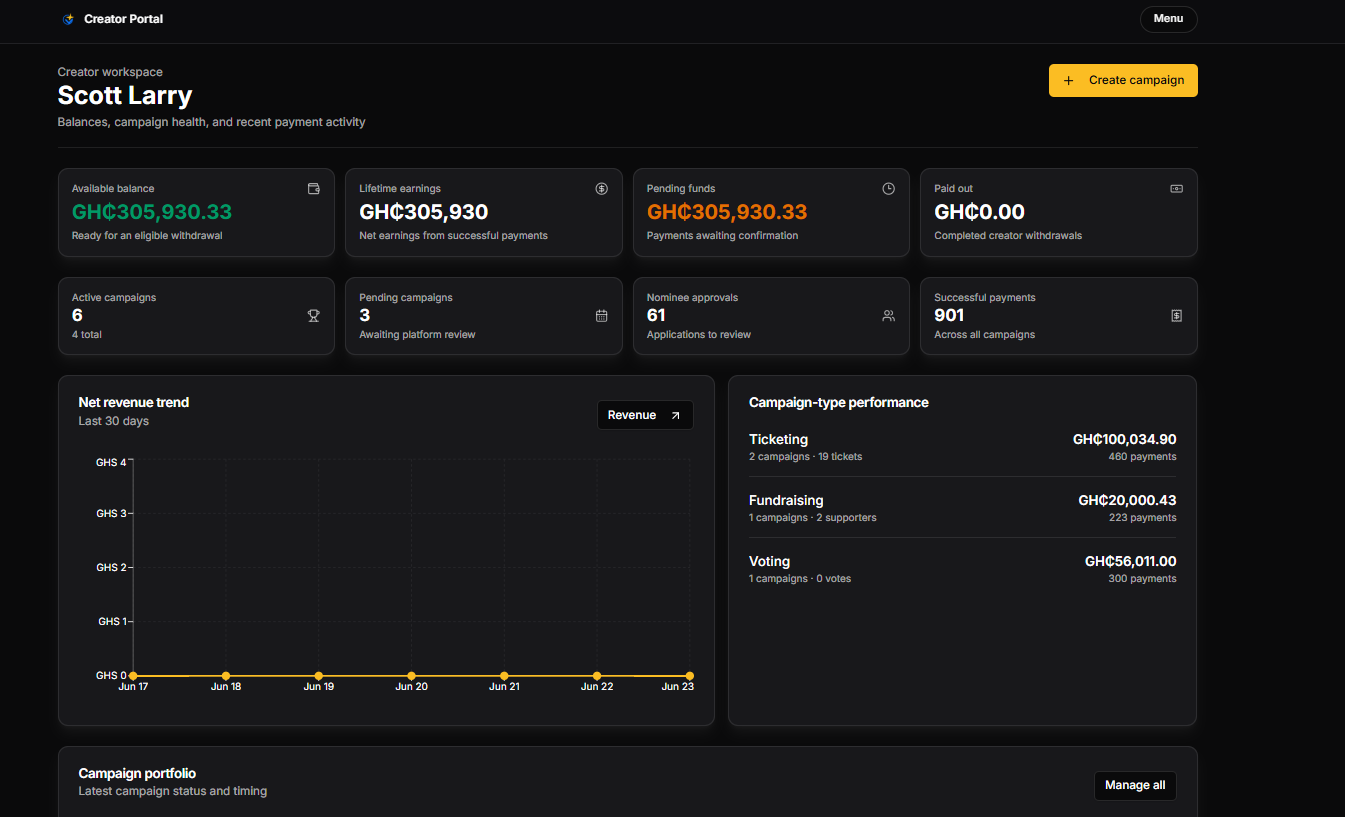
SparkGlim is designed for organizations that have moved beyond basic event creation and require a professional, modular approach. It fits best when your event requires more than just a ticket purchase; for instance, when you need integrated digital voting, fundraising capabilities, or granular creator dashboards. Because SparkGlim supports QR ticket verification, it is particularly effective for high-traffic physical events where manual check-in would cause unacceptable delays.
Key Evaluation Checklist
Before committing to a provider, ensure you have addressed the following operational questions:
- Payment Integrations: Does the platform support the specific local payment methods your audience uses most?
- Verification Methods: Can your team verify tickets via mobile or QR scan without requiring expensive hardware?
- Team Roles: Can you assign specific access levels to your staff to prevent accidental data modification?
- Analytics & Data: Do you have access to real-time attendee data to inform your marketing strategy?
- Branding: For professional bodies, does the platform support white-label options to maintain organizational identity? You can explore our white-label solutions for deeper customization.
Conclusion
Choosing an event platform is a long-term investment in your organization's capability. By moving away from disjointed stacks and toward integrated solutions, you reduce manual workload and increase the professional quality of your events. SparkGlim is built to empower organizers with the tools needed to manage campaigns, verify attendees, and engage communities effectively. If you are ready to evaluate how we can support your specific organizational goals, please contact our team to discuss your requirements. You can also view our pricing models to better understand how to align your budget with your needs.
Frequently Asked Questions
What are the primary advantages of an integrated event platform?
An integrated platform provides a unified dashboard for ticketing, attendee verification, and analytics, reducing the need to juggle multiple, disconnected software services.
How does QR verification benefit my event?
QR code verification allows your team to check in attendees rapidly using mobile devices, which eliminates long queues and prevents ticket fraud or duplication.
Can SparkGlim support custom branding for my organization?
Yes, we offer white-label deployments that allow organizations to maintain their brand identity throughout the event discovery and ticketing process.
Is the platform suitable for both large and small scale events?
The platform is designed to scale with your needs, supporting everything from community-level registrations to high-volume ticketed events with complex team requirements.
Article gallery
Frequently asked questions
What are the primary advantages of an integrated event platform?
An integrated platform provides a unified dashboard for ticketing, attendee verification, and analytics, reducing the need to juggle multiple, disconnected software services.
How does QR verification benefit my event?
QR code verification allows your team to check in attendees rapidly using mobile devices, which eliminates long queues and prevents ticket fraud or duplication.
Can SparkGlim support custom branding for my organization?
Yes, we offer white-label deployments that allow organizations to maintain their brand identity throughout the event discovery and ticketing process.
Is the platform suitable for both large and small scale events?
The platform is designed to scale with your needs, supporting everything from community-level registrations to high-volume ticketed events with complex team requirements.
Found this helpful?


Comments (0)