
In contemporary democratic systems, campus administrations, and community organizations, maintaining public trust during a vote is paramount. Whether conducting Student Representative Council (SRC) elections at a university in Accra, managing local business polls, or executing regional talent awards, organizers face the administrative challenge of validating every single vote cast. Historically, manual tallies and poorly structured digital forms have left room for discrepancies, causing disputes that disrupt organizational unity and damage reputations. To combat this, digital systems must transition from simple counters to comprehensive, audit-ready structures.
Ensuring voting integrity does not rely on a single, impenetrable security shield. Instead, it is established through a systematic sequence of transaction records, rigorous vote quantity controls, strict status handling, and isolated administrative accounts. The SparkGlim infrastructure provides these clear audit paths, enabling organizers to verify, analyze, and justify outcomes with structured data records. By understanding and utilizing these governance tools, organizers can establish a highly transparent and predictable environment for all participants.
The Mechanics of Transaction-Based Voting
At the core of the SparkGlim voting model is the principle that every vote is a transaction. Rather than simply incrementing an unverified public database counter, every action is logged with a unique, non-repeating transaction identifier. This approach prevents arbitrary alterations of tally sheets and provides a step-by-step history of all user interactions.
When a participant engages with the platform's digital voting system, their choices are captured alongside essential transactional metadata. This includes the date, the specific campaign or candidate category, and the allocated vote quantities. For contests that incorporate fundraising elements or premium votes—a common format in many commercial contests and entertainment pageants across Ghana—the system ensures that the vote value corresponds exactly to verified payment receipts.
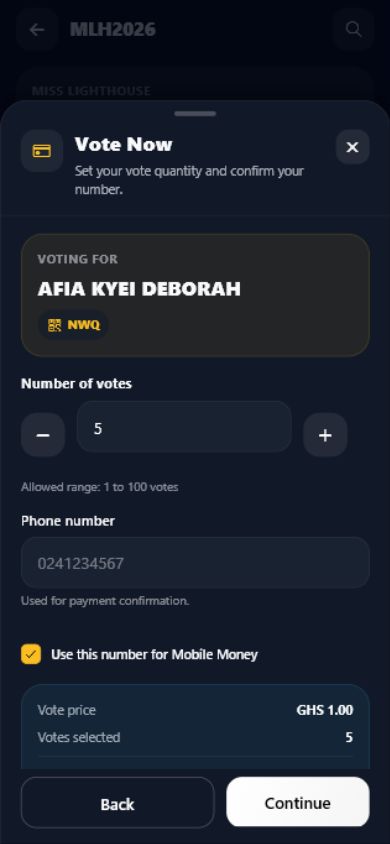
Understanding Vote Quantities and Status Handling
A major vulnerability in basic digital voting platforms is the lack of strict status handling. If a transaction is interrupted mid-way, or if network connectivity drops, basic platforms can record conflicting results. SparkGlim mitigates this through a defined state-machine model for vote transactions:
- Pending: The vote transaction is registered but awaits confirmation from external infrastructure (such as local telecommunication providers or card processors).
- Successful: The gateway confirms the payload, and the vote quantity is automatically added to the candidate's verified total.
- Failed: The system logs an aborted attempt, ensuring that no unverified or incomplete transaction can alter the public dashboard counts.
By enforcing this workflow, SparkGlim provides a transparent log that can be cross-referenced directly with external financial statement reconciliations or mobile money logs. This makes audit processes reliable and highly resilient against manual counting errors.
Restricting Access and Ensuring Role Isolation
Voting integrity is highly dependent on internal team governance. If multiple administrators share a single set of credentials, identifying the source of an administrative change becomes impossible. SparkGlim addresses this risk by providing isolated organizer accounts and team access permissions, keeping credentials secure and tracking every modification to the event state.
Campaign organizers can invite team members with specific roles, limiting permissions to avoid accidental modifications. For instance, a university election commissioner can view real-time voter turnout and analytical insights without having the permission to delete candidate entries or alter core campaign configurations. This separation of concerns minimizes the risk of internal collusion or unintended structural changes mid-election.
Furthermore, SparkGlim's framework is designed to prevent overlapping data across campaigns. Each event operates within its own sandbox context, ensuring that participant data, voting totals, and campaign settings remain isolated from external influences. For organizations requiring customized, white-labeled deployments, SparkGlim provides verified channels that align administrative privileges with organizational structures, which can be explored in detail in our security overview.
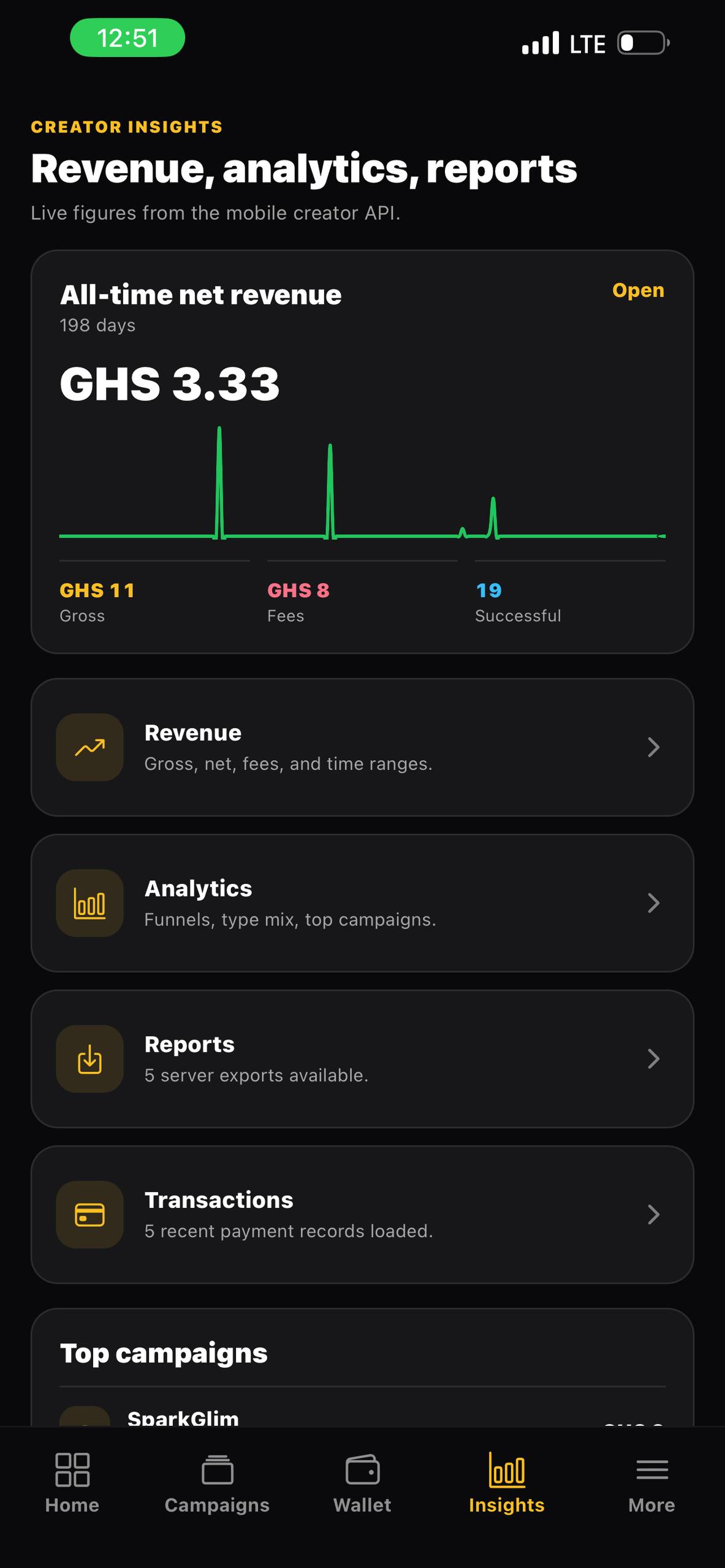
Auditable Logs and Creator Analytics
During and after a live poll, election auditors require instant access to verifiable data. Through SparkGlim's creator dashboards, organizers can download clean, raw transaction logs. These logs do not contain sensitive password details but provide necessary metadata to reconstruct the timeline of the election.
If an organization or campus body disputes the results of an election, the committee can execute an independent audit. By matching the transaction logs exported from SparkGlim with corresponding payment gateway records or local mobile money provider APIs, the independent body can quickly identify and verify valid votes. This quantitative verification processes eliminates doubt and establishes trust among participants and candidates.
A Checklist for Organizing a Transparent Election
To maximize the integrity of your next digital campaign on SparkGlim, consider adopting this practical planning checklist:
- Configure Role-Based Access: Assign specific, individual roles to your steering committee. Avoid sharing top-level master passwords across teams.
- Set Up Clear Candidate Parameters: Input correct names, registration numbers, and images before opening the polls to avoid confusing voters.
- Reconcile Daily Logs: Export your voter transaction reports daily. Cross-check your pending status rates against successful transactions.
- Keep Participants Informed: Use automated email and SMS notification updates to verify successfully recorded votes for end-users.
- Formulate an Audit Timeline: Decide in advance when voting logs will be sealed, audited, and published to candidates and media partners.
Frequently Asked Questions
Can vote records be modified manually by organizers?
No. SparkGlim's ledger-based tracking ensures that once a transaction reaches a final status, its vote quantity cannot be retroactively altered by organizers. All finalized votes are permanent logs within the campaign context.
What happens when a network drop occurs mid-transaction?
The system places the vote in a pending state until confirmation is received from the corresponding payment gateway. If confirmation is not received within the timeout window, the status changes to failed, preventing unverified tallies.
How does SparkGlim verify the identity of voting users?
Depending on the campaign configuration, voting sessions can be restricted via unique voter IDs, phone numbers, email confirmations, or verified tickets to prevent spam and artificial voting loops.
Is role-based governance available for team accounts?
Yes. Organizers can invite team members and assign specific permissions, isolating critical system settings from daily monitoring activities and ensuring that all admin changes are tracked individually.
Conclusion and Support
Voting integrity is not a singular feature but rather a continuous combination of transparency, auditability, and disciplined account governance. By leveraging transactional logging, status handling, and strict user-role separation, SparkGlim empowers campus bodies, non-profits, and business organizations to manage digital polls with high administrative confidence.
If you are planning an upcoming election, award show, or community poll in Ghana or other supported regions, our technical support team is ready to guide you. For questions regarding system capabilities, custom integrations, or approved white-label configurations, visit our contact and support portal to speak with a platform specialist today.
Article gallery
Frequently asked questions
Can vote records be modified manually by organizers?
No. SparkGlim's ledger-based tracking ensures that once a transaction reaches a final status, its vote quantity cannot be retroactively altered by organizers. All finalized votes are permanent logs within the campaign context.
What happens when a network drop occurs mid-transaction?
The system places the vote in a pending state until confirmation is received from the corresponding payment gateway. If confirmation is not received within the timeout window, the status changes to failed, preventing unverified tallies.
How does SparkGlim verify the identity of voting users?
Depending on the campaign configuration, voting sessions can be restricted via unique voter IDs, phone numbers, email confirmations, or verified tickets to prevent spam and artificial voting loops.
Is role-based governance available for team accounts?
Yes. Organizers can invite team members and assign specific permissions, isolating critical system settings from daily monitoring activities and ensuring that all admin changes are tracked.
Found this helpful?



Comments (0)