
Organizing a talent competition for children is a rewarding initiative that fosters confidence, creativity, and community engagement. However, the unique requirements of working with minors demand a rigorous approach to logistics, safeguarding, and data privacy. Success depends on balancing the excitement of the event with a structure that prioritizes the well-being of every participant, ensuring that the environment remains professional, inclusive, and strictly protected against potential risks.
By leveraging a unified backend platform, organizers can manage complex event workflows—from digital participant registration and ticket sales to secure voting—without the need to integrate disparate third-party systems. This guide details the operational standards required to manage a high-stakes youth competition effectively, focusing on the SparkGlim ecosystem to maintain compliance, transparency, and high performance during periods of peak user activity.

1. Establishing a Safeguarding-First Framework
The safety of young participants is the foundational pillar of any youth-focused event. Safeguarding starts with clear consent protocols where legal guardians must explicitly approve the use of a child’s image, performance media, and personal data. Organizers should maintain a restricted-access portal where all consent forms are digitally archived and verified before any media is published on public platforms.
Furthermore, communication must be routed through verified, closed channels. Avoid using public social media threads for direct contact with parents or children. Instead, utilize the SparkGlim creator dashboard to manage private notifications. This ensures that sensitive information, such as performance times, venue updates, or internal competition scores, is kept away from public scrutiny and remains compliant with regional data protection standards.
2. Defining Eligibility and Participant Onboarding
Clearly defined eligibility criteria prevent confusion and help manage expectations early in the lifecycle of the event. Whether you are hosting a local community dance-off or a national singing competition, define the age ranges, entry requirements, and the specific documentation needed—such as school IDs or parental affidavits—to verify identities. When collecting this information, ensure that the data is handled via encrypted submission forms hosted on a secure infrastructure.
Organizers should provide a simplified dashboard for participants to upload their bios and performance clips. By centralizing these submissions within your campaign management portal, you eliminate the risk of lost files and ensure that all content undergoes a pre-screening process for age-appropriateness before it goes live to a voting audience.
3. Venue Operations and Ticketing Logistics
Whether your event is live or hybrid, venue operations require meticulous planning. For physical components, the use of QR-based ticketing facilitates a fast, touchless entry experience. SparkGlim’s ticketing module allows organizers to generate unique, verifiable QR codes for every attendee. This system reduces long queues at the gate and provides real-time analytics on attendance, which is critical for security and crowd management purposes.
If you are coordinating multiple sub-events or semi-final rounds, treat each venue as a distinct operational entity within your management software. This allows you to set specific attendee limits, manage capacity in real-time, and route payments through unified channels that support both cards and mobile money, a necessity for seamless operations in markets like Ghana.
4. Implementing Transparent Digital Voting
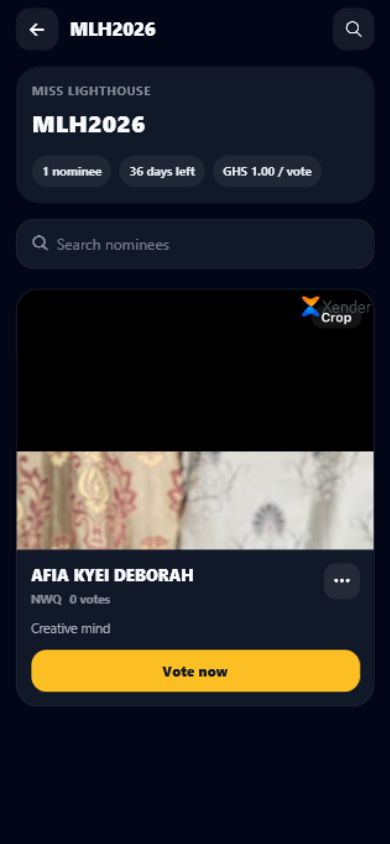
Public voting is a highlight for many competitions, but it must be structured to prevent exploitation and ensure fairness. Utilizing digital voting modules allows you to control the weight of votes and monitor activity in real-time. Transparent voting rules, such as limiting votes per account or device, help maintain the integrity of the results. Always clearly communicate these rules to the public so participants and their supporters understand the parameters of the competition.
Avoid relying on unregulated social media polls, which are prone to bot manipulation. Instead, use a structured voting backend where vote counts are processed through a validated architecture. Under SparkGlim load-test conditions, the system has handled over 500,000 requests per minute; while individual environments and configurations will vary, this capability provides the scalability needed to handle sudden spikes during voting windows without crashing.
5. Protecting Nominee Media and Privacy
The digital footprint of a minor is a significant concern. When publishing nominee photos or videos, focus on group performance shots rather than intimate close-ups if possible. Use watermarking tools available in the creator dashboard to protect against the unauthorized re-purposing of footage.
Furthermore, implement a "right to be forgotten" policy. Ensure that your platform configuration allows for the swift removal of a child’s profile and media if a parent or guardian requests withdrawal from the competition. This responsiveness is a cornerstone of digital safeguarding and builds immense trust with the families participating in your event.
6. Managing Family Communication and Expectations
Miscommunication is often the primary source of conflict in youth competitions. Create a clear, written handbook for parents that outlines the judging process, the criteria for advancement, and the methods for raising concerns. Use the automated notification features within your creator portal to send broadcast updates to all registered families simultaneously, ensuring that no one is left out of critical information regarding scheduling changes.
Host a virtual information session or Q&A before the event to address concerns directly. Transparency regarding how results are calculated—whether it is a 50/50 split between judge scores and public votes, or a purely jury-based decision—will mitigate accusations of bias and help keep the environment focused on the children's growth rather than administrative disputes.
7. Handling Results and Complaints Professionally
The culmination of any competition should be a celebration, but it must also include a clear mechanism for complaints. If a participant or guardian feels the result was influenced by a technical error or a breach of rules, they need a formal avenue for feedback. Use the contact management features to track these complaints as tickets rather than informal chat messages.
Maintain an objective judging panel. If you are using a hybrid digital-manual approach, ensure the judges’ scores are audited against the timestamped records of your digital voting platform. Keeping these logs in your secure, centralized dashboard ensures that you have the evidence required to address any post-event grievances with clarity and precision.
8. Scaling with Integrated Event Management
As you expand your reach, the complexity of managing events will grow. Rather than cobbling together various tools for hosting, payment, and ticketing, rely on a single backend infrastructure. This not only streamlines your workflow but ensures that your security and privacy settings remain uniform across every aspect of the campaign. Whether you require custom domain hosting or specific USSD routing for mobile-money payments, ensuring that these are all processed through a verified, single-source platform is the safest way to scale.
Frequently Asked Questions
- How do I ensure digital voting is secure for children?
Implement strict authentication protocols and rate limiting. By using a platform that validates requests through a secure backend, you prevent vote manipulation while ensuring all interactions occur within a monitored environment. - Can I use USSD for voting in my competition?
Yes, SparkGlim supports approved custom USSD routing. This allows users without smartphones or reliable data access to participate in the voting process, expanding the reach of your competition in markets where mobile money and USSD are dominant. - What should I do if a parent requests the removal of their child’s media?
As part of your safeguarding agreement, you must have an immediate process to unpublish the media from your platform and any managed subdomains. A centralized creator dashboard makes it easy to manage and update such privacy requests instantly. - Is the platform capacity enough for a large-scale event?
SparkGlim’s backend has been tested to handle over 500,000 requests per minute under load-test conditions. While production environments vary based on your specific configuration, this high performance is designed to manage the traffic surges typical of active voting periods.
Organizing a kids' talent competition is an exercise in meticulous care and robust operational oversight. By centering your process on safeguarding, using integrated digital tools for ticketing and voting, and maintaining clear communication with families, you can host a memorable event that celebrates youth talent safely. Ensure your operational foundation is solid by utilizing verified platforms that provide the analytics, security, and scalability necessary for success. Start building your next event at SparkGlim Events today.
Article gallery
Frequently asked questions
How do I ensure digital voting is secure for children?
Implement strict authentication protocols and rate limiting. By using a platform that validates requests through a secure backend, you prevent vote manipulation while ensuring all interactions occur within a monitored environment.
Can I use USSD for voting in my competition?
Yes, SparkGlim supports approved custom USSD routing. This allows users without smartphones or reliable data access to participate in the voting process, expanding the reach of your competition in markets where mobile money and USSD are dominant.
What should I do if a parent requests the removal of their child’s media?
As part of your safeguarding agreement, you must have an immediate process to unpublish the media from your platform and any managed subdomains. A centralized creator dashboard makes it easy to manage and update such privacy requests instantly.
Is the platform capacity enough for a large-scale event?
SparkGlim’s backend has been tested to handle over 500,000 requests per minute under load-test conditions. While production environments vary based on your specific configuration, this high performance is designed to manage the traffic surges typical of active voting periods.
Found this helpful?


Comments (0)