
Unstructured Supplementary Service Data (USSD) remains one of the most vital communication protocols in the modern mobile ecosystem, especially in emerging markets like Ghana. By utilizing a simple character-based interface, USSD provides a direct, low-latency communication channel that operates regardless of whether a user has an active internet connection or a high-end smartphone. This accessibility ensures that event organizers, businesses, and community leaders can reach 100% of their mobile audience, bridging the digital divide between feature-phone users and mobile-data subscribers.
For creators and organizers, the complexity of interacting with telecommunications providers has historically been a significant barrier to entry. Managing short codes, negotiating with network operators, and building robust backend infrastructure typically requires dedicated engineering resources and immense capital. SparkGlim eliminates these friction points by providing a unified platform where creators can deploy USSD-based campaigns, ticketing, and voting systems instantly. By abstracting the telecom layer, SparkGlim allows you to focus on your content and audience engagement while the platform handles the routing, session management, and transaction reconciliation.

Understanding the Fundamentals of USSD Technology
At its core, USSD is a protocol used by GSM cellular telephones to communicate with the service provider's computers. Unlike SMS, which is a store-and-forward service, USSD establishes a real-time session between the mobile device and the application server. This session-based architecture allows for a conversational interaction where the user sees a menu and responds accordingly.
The Anatomy of a USSD Session
Every USSD interaction begins with a short code (e.g., *713*123#). When a user dials this code, their device initiates a handshake with the mobile network, which then forwards the request to the SparkGlim backend. The platform serves a dynamic menu, typically presented as a list of numbered options. As the user selects an option, the session remains open, allowing for a deep, multi-step navigation process—perfect for registering for an event, casting a vote, or initiating a mobile money payment.
Why USSD Persists in a 4G World
- Offline Capability: Users do not need data or Wi-Fi to engage with your service.
- Universal Compatibility: Every mobile phone, from the most basic feature phone to the latest smartphone, natively supports USSD.
- Instant Engagement: There are no apps to download or updates to install; the service is embedded in the phone's dialer.
- High Conversion Rates: The brevity of the USSD interface minimizes distractions, leading to higher completion rates for tasks like event ticket purchases.
Practical Use Cases for Creators and Organizers
With SparkGlim, you can deploy a variety of interactive mobile experiences that drive real-world results. Whether you are hosting a campus concert, a national fundraising drive, or a local community voting event, USSD serves as your primary bridge to the user.
Event Ticketing and QR Verification
One of the most effective ways to manage event entry is through USSD-purchased tickets. Users dial your campaign code, select the ticket type, and complete the transaction. Upon payment confirmation, the SparkGlim system generates a secure entry credential. Organizers can then use the SparkGlim mobile creator tools to scan and verify tickets at the gate, ensuring that entry is both efficient and fraud-resistant.
Digital Voting and Polls
In student government elections or community awards, participation is everything. By setting up a dedicated USSD short code, you ensure that every voter, regardless of their phone model, can cast their ballot. You can define vote quantities per user and track progress in real-time through the SparkGlim creator dashboard, providing transparency and accuracy without the need for paper ballots.
SparkGlim: Simplifying Your Telecom Infrastructure
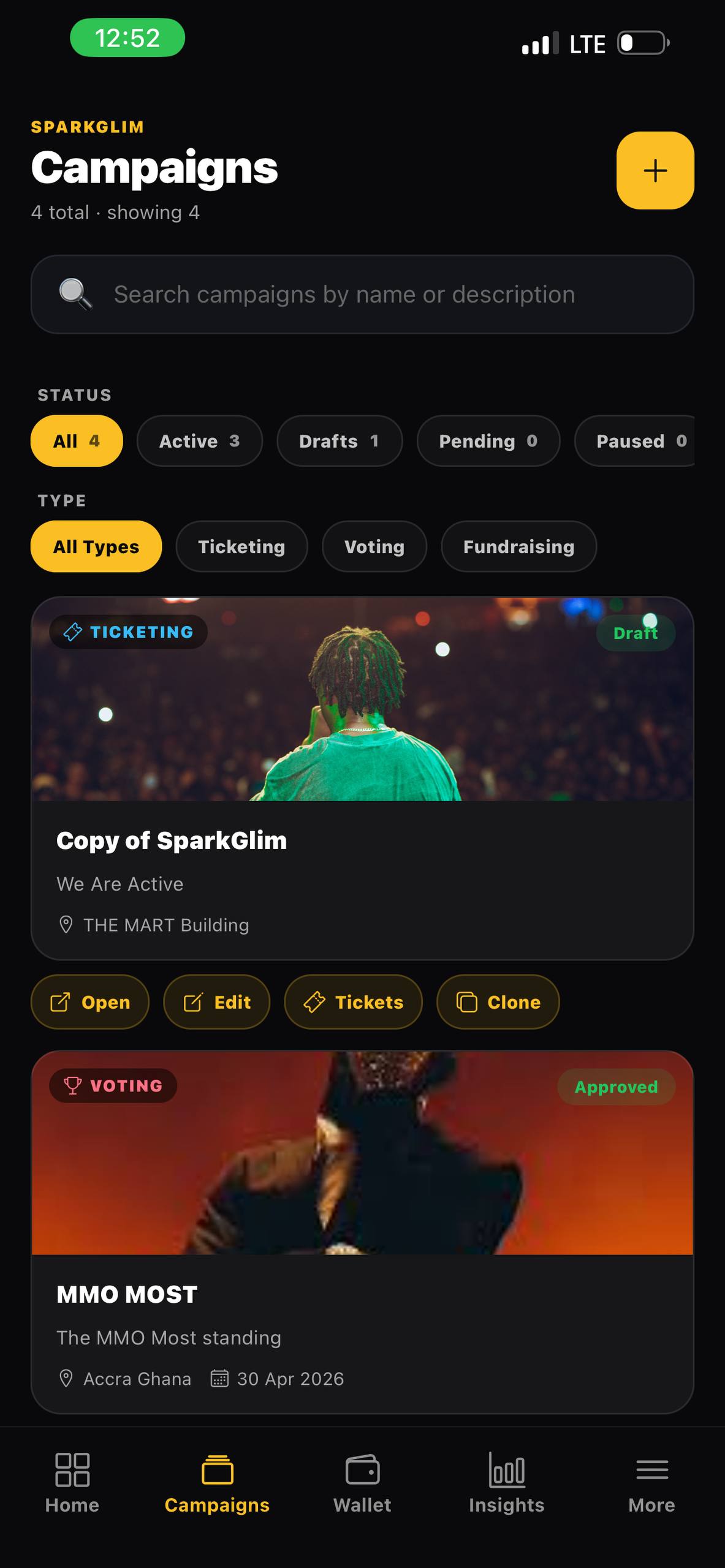
Building a telecom-ready application typically involves months of vetting and expensive backend development. SparkGlim simplifies this by acting as your technical partner. We manage the approved custom USSD routing and provide a layer of abstraction that allows your web-based campaigns to communicate seamlessly with mobile networks. When you create a campaign at https://sparkglim.net/ussd, you are not just launching a web page; you are activating a comprehensive mobile infrastructure.
The Role of Backend Routing
SparkGlim’s backend acts as the orchestrator of your campaign. When a user interacts with your short code, the platform identifies the user, processes their choice against your defined logic, and delivers the appropriate next step. This includes:
- Payment Integration: Routing transactions through supported mobile money or bank channels.
- Data Synchronization: Ensuring that actions taken via USSD are reflected instantly on your hosted event websites or custom domains.
- Analytics and Reporting: Tracking engagement trends so you can see exactly where users are dropping off or converting.
Limitations and Best Practices
While USSD is powerful, it has physical limitations. The character count per screen is restricted, and session timeouts occur if a user waits too long to provide input. To maximize your results, keep your service names concise, ensure your menu steps are logical, and always provide a clear confirmation message once an action—like a purchase or a vote—is completed. Furthermore, while SparkGlim works hard to ensure robust uptime, users should always ensure they have active service on their mobile provider’s network to initiate the session.
Conclusion
USSD is more than just a relic of early mobile technology; it is a critical tool for inclusive digital growth. By leveraging SparkGlim, organizers and creators in Ghana and beyond can unlock the potential of the mobile dialer to facilitate payments, voting, and ticketing. You do not need to be a telecom engineer to run a professional campaign—you only need a vision and the right partner to execute it. Start your journey today at https://sparkglim.net/register and see how easily you can scale your impact.
Frequently Asked Questions
What is a USSD short code?
A USSD short code is a sequence of numbers and symbols (usually starting with * and ending with #) that, when dialed on a mobile phone, triggers a specific service or menu on the mobile network.
Do my users need internet access to use my USSD campaign?
No, one of the primary benefits of USSD is that it operates entirely offline, making it accessible to any user with a mobile phone and network reception.
How does SparkGlim handle payments via USSD?
SparkGlim routes USSD-initiated requests to supported payment gateways, allowing users to pay for tickets or participate in fundraising using their mobile money or bank accounts securely.
Can I use my own custom short code with SparkGlim?
SparkGlim supports approved custom USSD routing and shared extensions. You can discuss your specific requirements for branding your short code by contacting our support team at https://sparkglim.net/contact.
Is there a limit to how many users can access my USSD menu at once?
SparkGlim’s infrastructure is designed to handle concurrent traffic, though actual capacity depends on your specific campaign configuration and the limits of the underlying network provider.
Article gallery
Frequently asked questions
What is a USSD short code?
A USSD short code is a sequence of numbers and symbols (usually starting with * and ending with #) that, when dialed on a mobile phone, triggers a specific service or menu on the mobile network.
Do my users need internet access to use my USSD campaign?
No, one of the primary benefits of USSD is that it operates entirely offline, making it accessible to any user with a mobile phone and network reception.
How does SparkGlim handle payments via USSD?
SparkGlim routes USSD-initiated requests to supported payment gateways, allowing users to pay for tickets or participate in fundraising using their mobile money or bank accounts securely.
Can I use my own custom short code with SparkGlim?
SparkGlim supports approved custom USSD routing and shared extensions. You can discuss your specific requirements for branding your short code by contacting our support team at https://sparkglim.net/contact.
Is there a limit to how many users can access my USSD menu at once?
SparkGlim’s infrastructure is designed to handle concurrent traffic, though actual capacity depends on your specific campaign configuration and the limits of the underlying network provider.
Found this helpful?

Comments (0)